
Mar 29, 2026
How Claude Connects to NetSuite. And What That Actually Looks Like in Practice
A technical breakdown of how AI connects to NetSuite using MCP, what it enables, and the real limitations companies need to understand.
There is a lot of noise in the market right now about AI and enterprise software. Vendors are attaching the word "AI" to features that are, at best, smarter autocomplete. So when we say that it is now possible to connect a large language model directly to your NetSuite instance in a way that changes how your team operates, the natural response is skepticism. That skepticism is healthy.
This article is an attempt to be specific. Not about the vision, but about the mechanism — how the connection actually works, what it enables, and where the real constraints are.
The technology behind the connection: MCP
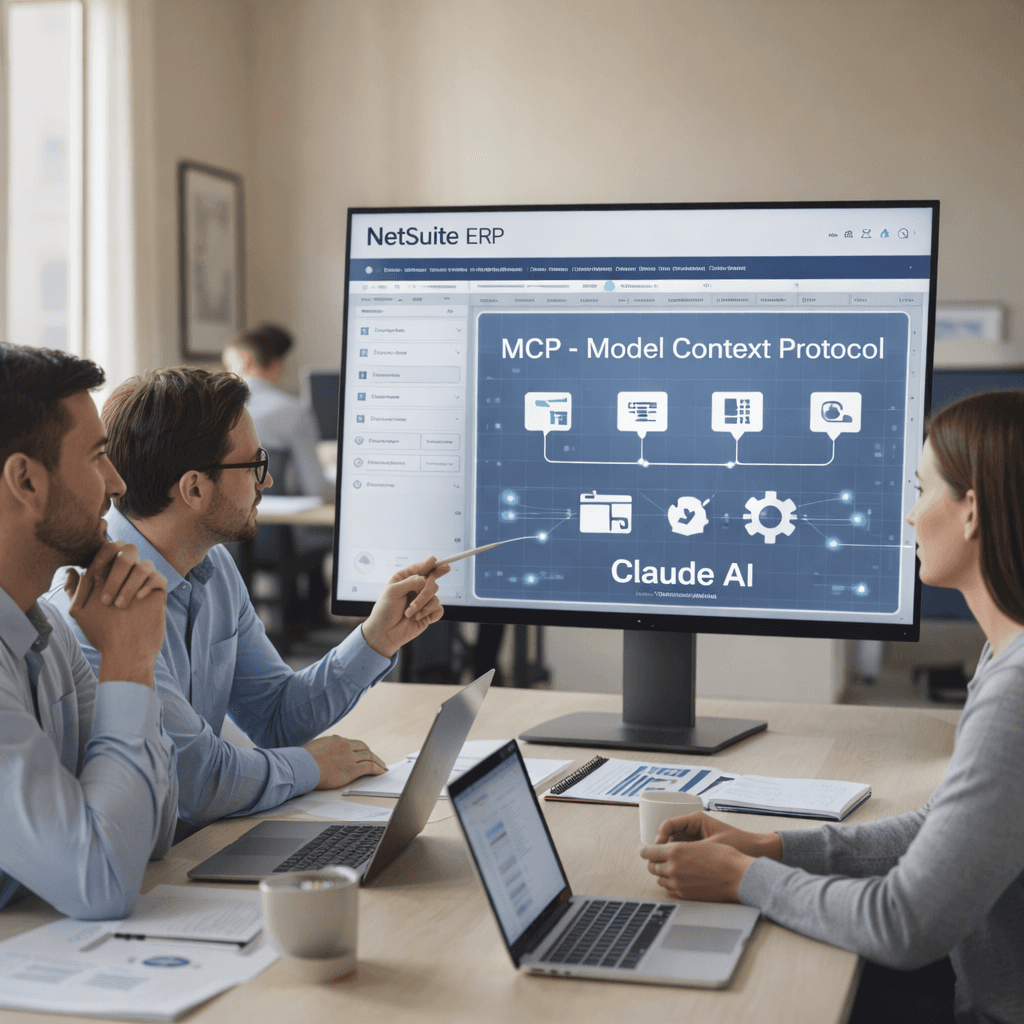
The bridge between an AI model and your NetSuite environment is a protocol called MCP — Model Context Protocol. MCP is an open standard that allows large language models to interface with external systems in a structured, permissioned, and auditable way.
Think of it as a translation layer. On one side is your NetSuite instance, with its records, transactions, workflows, and configurations. On the other side is the AI model. MCP defines how information moves between them — what the AI can request, what NetSuite returns, and what actions the AI is permitted to take.
This is not a scraping tool or an API hack. MCP connections are intentional integrations that respect NetSuite's architecture and permission model. The AI can only see and act on what it has been explicitly granted access to.
What Claude can do inside NetSuite
Once the connection is established, the practical capabilities fall into a few clear categories.
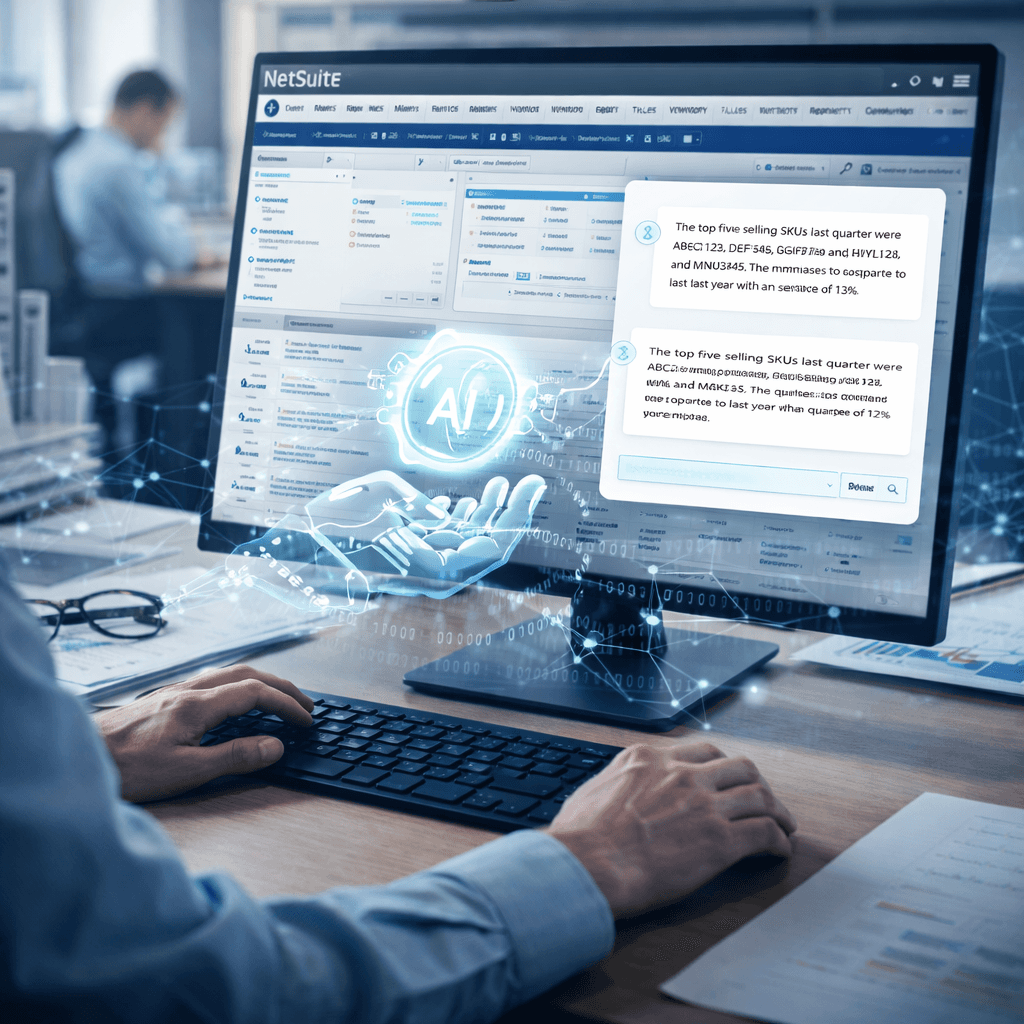
Data retrieval and analysis: Claude can query records across your NetSuite environment in response to plain language questions. A CFO asking "how does our current accounts receivable aging compare to the same point last quarter" gets an answer drawn directly from the system — no report building required, no waiting for the admin to run a search.
Workflow automation: Repetitive tasks that follow a consistent logic can be handed off to the AI. Approval routing, record updates, status changes, notification triggers — if the rules are clear, the AI can execute them reliably.
Anomaly detection: Claude can monitor patterns in your data and surface things that fall outside expected ranges. An unusual spike in a cost center, a vendor payment that does not match historical behavior, inventory that is moving faster or slower than forecast — these are the kinds of signals that get missed in manual review and caught immediately by a model paying continuous attention.
Documentation and explanation: NetSuite configurations are often poorly documented, which creates significant risk when team members turn over. Claude can read your configuration and generate clear documentation — saved searches, workflow logic, custom fields, role structures — in plain language your whole team can understand.
What it cannot do
Honesty about limitations matters more than a polished pitch, so here are the real constraints.
Claude works within your NetSuite configuration, not around it. If your data quality is poor — inconsistent record-keeping, misclassified transactions, duplicate entries — the AI will reflect that. Garbage in, garbage out is still the rule.
AI is not a replacement for a configured system. If critical workflows are not set up in NetSuite, Claude cannot compensate by inferring what should happen. The ERP needs to be reasonably well structured before an AI layer adds meaningful value.
Token costs are real. Every interaction with the AI model has a cost. For businesses running high-volume operations with many users querying the system constantly, this needs to be factored into the economics of the integration. Cost controls and usage guidelines are part of any responsible implementation.
The AI will not always be right. Large language models are highly capable but not infallible. Any integration into a financial system needs human review processes, especially for anything that touches money movement, compliance, or external reporting.
What a properly configured integration looks like
A well-built NetSuite-to-AI integration does not happen overnight, and it does not happen by simply turning on a tool. The implementation process typically involves several distinct phases.
First, an assessment of the current NetSuite environment — what is working, what is creating friction, what workflows are candidates for AI augmentation, and where the data quality issues are that need to be addressed before adding an AI layer.
Second, a scoped integration plan that establishes which MCP connections to build, what permissions to configure, what actions the AI is allowed to take autonomously versus which require human approval, and what the testing and validation process looks like.
Third, a phased rollout that starts narrow — one department, one use case, one workflow — validates the results, and expands from there. Organizations that try to implement everything at once consistently get worse outcomes than those that start focused and build deliberately.
Fourth, ongoing management. An AI integration is not a one-time project. Models improve, business needs change, and the configuration needs to evolve with both. This is why the ongoing support relationship between the implementation partner and the client matters as much as the initial build.
The question of infrastructure cost
One thing that comes up consistently when businesses evaluate this kind of integration is the question of who pays for the AI infrastructure — the model usage, the compute, the API costs.
The honest answer is that those costs live with Oracle and with the AI provider, not with the implementation partner. NetSuite operates on Oracle's infrastructure. Claude operates on Anthropic's. What an implementation partner provides is the configuration, the integration logic, and the ongoing expertise to make sure everything runs correctly.
Understanding this distinction up front prevents the kind of misaligned expectations that derail implementations. The cost model for AI-enhanced ERP is different from traditional consulting, and it deserves a direct conversation before any contract is signed.
In the third and final part of this series, we will address the business case directly — how to evaluate whether this investment makes sense, what a realistic timeline looks like, and how companies have approached the decision to move from evaluation to implementation.
Recent posts





Related Articles
Your go-to source for mental health insights, tools, and advice.